Tackle sexual harassment and assault on campus with speak-up
Elker equips higher education institutions with the tools to protect the safety and well-being of their students and staff.

Incident reporting tools for campus safety teams
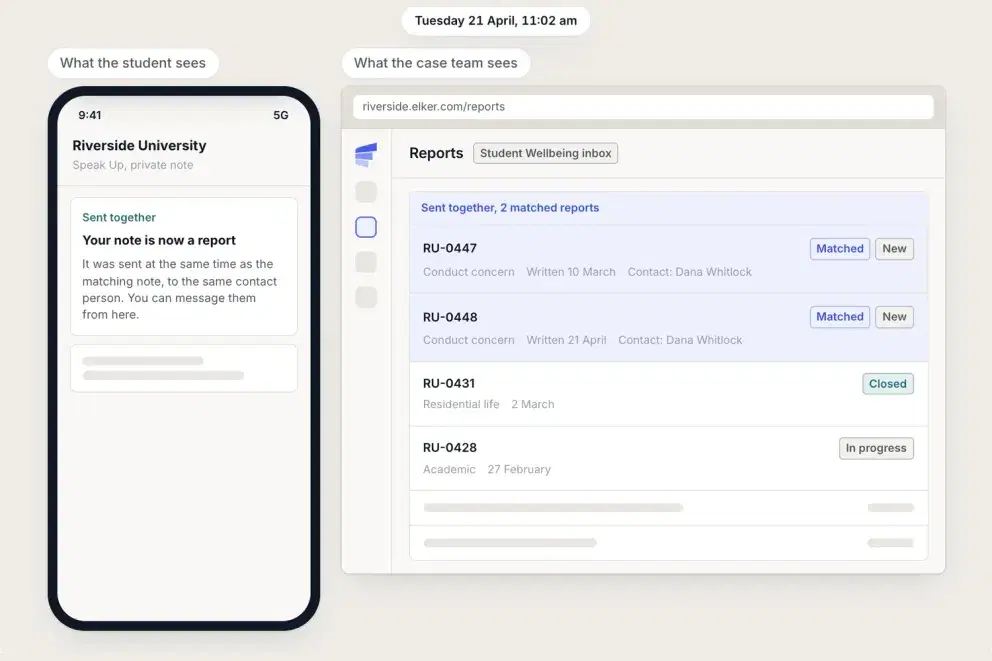
Students who think they're alone can come forward together
When a tutor targets several students, each often stays quiet. A student can keep a private, dated note and send it when someone else reports the same person.
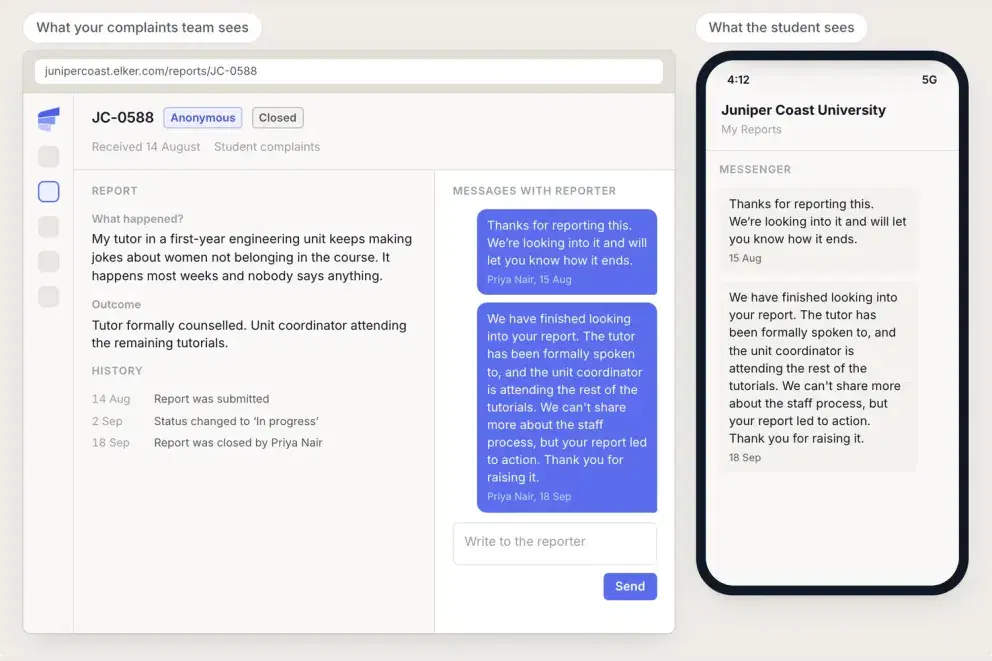
Every reporter hears how their report ended
Your student survey says people don't report because nothing would be done. You can tell anonymous reporters how their report ended, without knowing who they are.
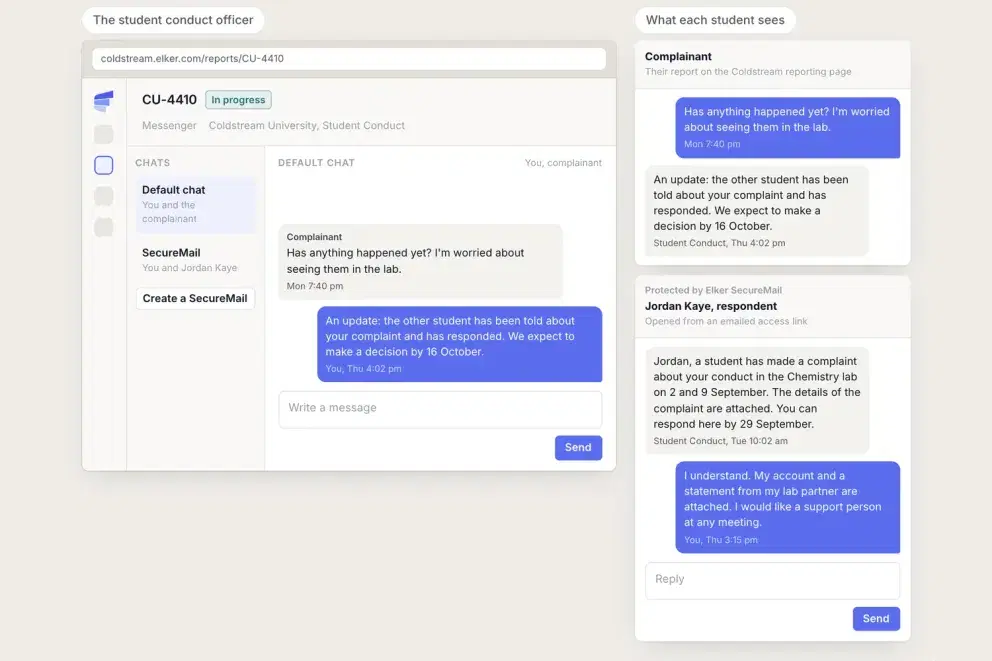
The complainant and the respondent each get their own updates
A student appeals, saying nobody told them what the complaint was about. Each party has their own thread on the case, so you can show who was told what.
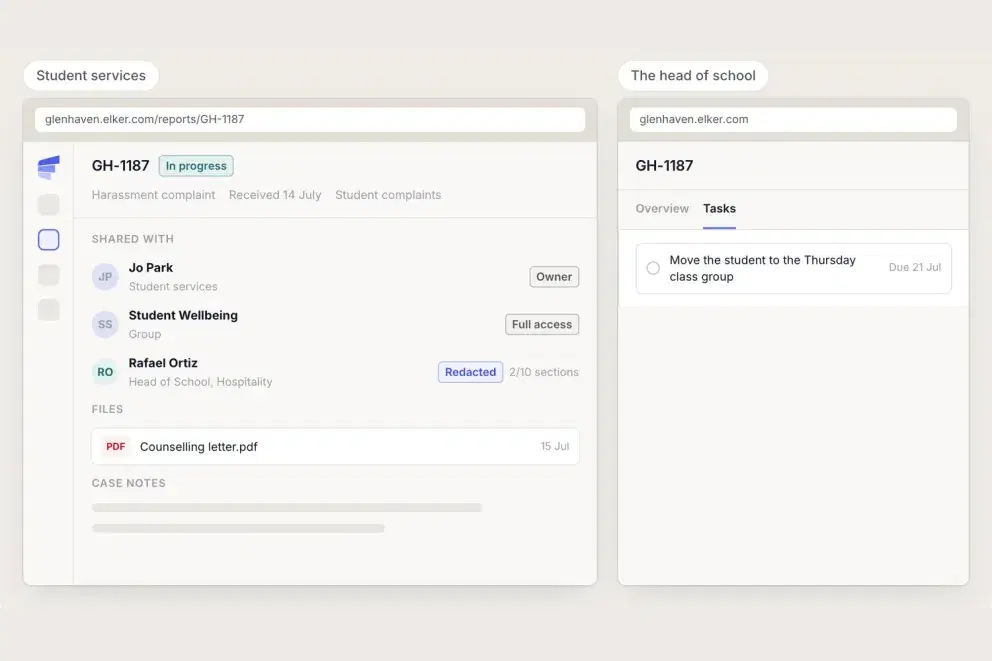
Share only what a head of school needs to see
The head of school needs to change a timetable, but the case holds counselling notes. Share only the sections they need, instead of retyping a summary into an email.
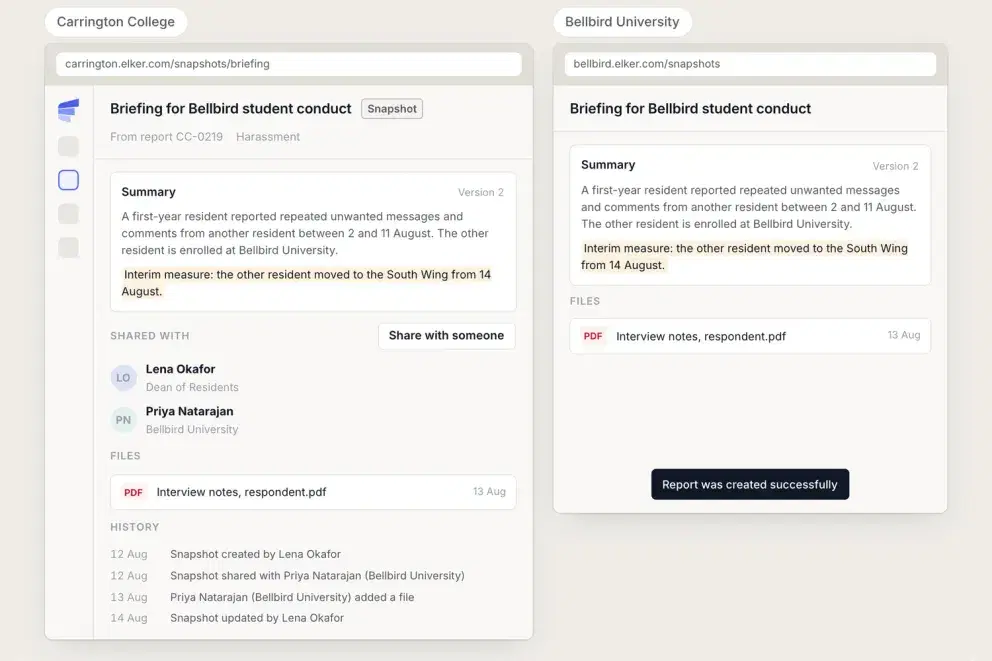
College and university teams work from one report
A student reports harassment at their residential college, and the university's conduct team needs the same details. The college shares one snapshot, and both teams work from it.
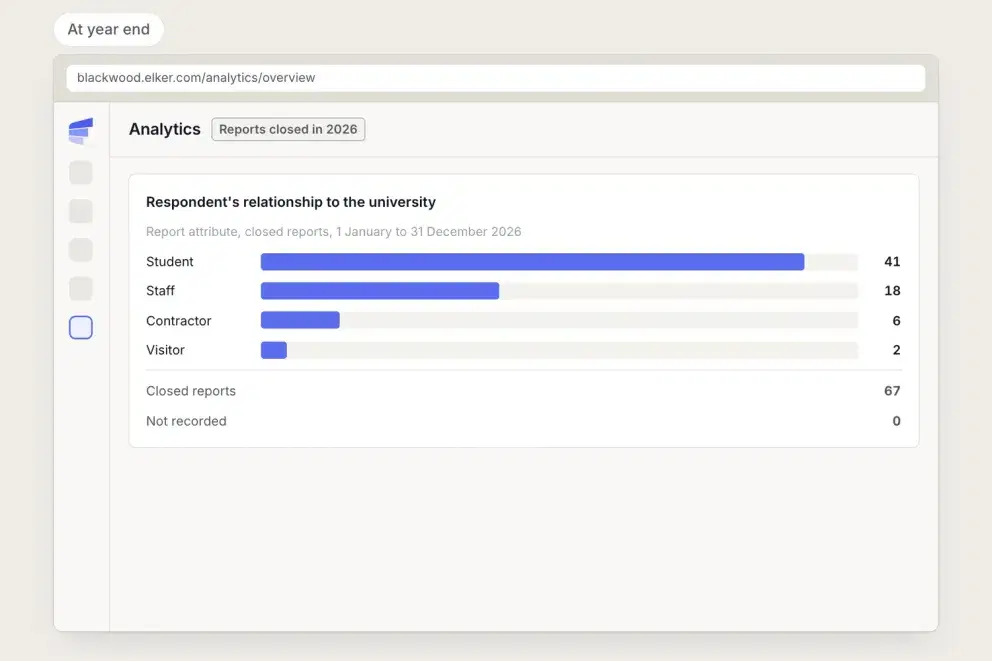
The GBV Code annual return comes straight from your cases
The annual return under the gender-based violence Code asks for figures nobody recorded consistently. Each data point it asks for sits on every case, so the return is a report you run.
Security and data protection for students and staff
- ISO 27001 certified
- SOC2 attested
- AES-256 encryption for data in transit and at rest
- Regional data hosting to meet local data privacy requirements
- Third-party security audits and penetration testing


The prevalence of sexual assault in Australian universities
The prevalence of sexual assault in Australian universities: a call to action

The 2021 National Student Safety Survey (NSSS) paints a grim picture of the prevalence of sexual harassment and assault in Australian universities. Nearly one-third of university students have experienced sexual assault at least once in their lifetime, with 4.5% experiencing it in a university context since starting their studies. The rates are alarmingly higher among female, transgender, and non-binary students. Sexual harassment is also rampant, affecting one in two students at least once in their lifetime.
Reporting rates are dismally low, with only 3.0% of students who experienced sexual harassment and 5.6% who experienced sexual assault making a formal report to their university. The reasons for not reporting are varied, including the belief that their experience wasn't serious enough or would be too hard to prove. Those who did report had mixed experiences with the university's reporting or complaint processes, leading to a lack of trust in the system. The National Student Safety Survey underscores the need for comprehensive and urgent action.
In 2023, the Respect at Work Bill came into effect, mandating a new positive duty in the Sex Discrimination Act. Universities must eliminate all sexual harassment and sex-based discrimination on campus. Universities must acknowledge the role of gender and other intersecting factors in driving sexual harassment and assault. They must take proactive measures to improve inclusivity and create safe learning environments, especially for vulnerable groups such as gender and sexuality-diverse students, and those with disabilities. The time for change is now; universities have a legal and moral responsibility to act.
Frequently asked questions













See how Elker can help with compliance and build a culture of accountability and trust in your organisation.